
Everything, connected.
Follow a topic, explore an argument, or find your next read.

Primary Markets Technology: Who Controls the Book and the Allocation?
Trace investor demand into bookbuilding and allocations. Examine identity, order changes, approval gates and the work technology leaves with the underwriter.

Financial Guarantees in India: Who Takes the Risk and Who Gains Access?
Guarantees change the allocation of a defined loss. Their value depends on the financing constraint they actually remove.

Building a Business in Una: Local Capability, Paying Customers and Patient Capital
A district’s advantage lies in what it can deliver reliably. Test the customer, the inputs and the cash cycle before committing fixed capital.

Quantum Computing in Banking: Real Advantage or an Expensive Experiment?
Compare quantum pilots with strong classical workflows. Inspect runtime, feasible outputs and decision gates while separating security migration from speculation.

India’s Capitulation Checklist: Flows, Fear and the Oil Overlay
A March adaptation of a US positioning checklist to Indian equities. The comparison is most useful where it exposes why foreign flows, domestic savings and oil dependence behave differently.

Something Is Off: The Gap Between Physical Oil and Futures
A detailed oil-market study follows a supply disruption through inventories, refinery constraints and demand loss. Its central question is when temporary buffers stop absorbing a shortage and prices must do more of the work.

The Last Buffer: India’s Domestic Flows and the Oil Shock
A historical India allocation study examines the tension between foreign outflows and resilient domestic savings. It traces energy and fertilizer costs through inflation, earnings and the rupee.

Repriced, Not Rejected: India and the North Asian AI Rotation
An India allocation essay separates the country’s long-term economic story from its relative valuation and sector mix. It examines why an AI-led profit cycle elsewhere in emerging markets can redirect marginal capital.

The Inference Inflection: Who Captures AI’s Margin?
An agent-economics framework connects token demand, inference costs and workflow adoption. It asks which businesses capture value when agents perform longer tasks and infrastructure costs change.

Down the Barrel, Into the Fields: India’s Energy-to-Food Transmission
A transmission study follows an energy disruption beyond crude prices into refined products, fertilizer and agriculture. It maps why the effects on margins and food supply can arrive on different clocks.

China’s Missile Industrial Complex — and What It Means for India
A defence-industrial study links listed suppliers, procurement demand and regional deterrence. It examines what industrial depth means for India without treating opaque stockpile estimates as precise comparisons.

India: Sentiment at the Trough
A May allocation case tests whether weak foreign positioning and cheaper relative valuations could precede an earnings recovery. It makes the sector mix and the oil-sensitive downside explicit.

When the Tail Wags the Dog: Options Flow and Equity Prices
A market-structure study explains how option hedging can reinforce or dampen a price move. The enduring lesson is to distinguish a short-gamma squeeze from a long-gamma stabilising position.

The Cheap Kill Chain: The Counter-Drone Economy
A defence technology study follows the commercial and procurement systems forming around inexpensive drones. It connects sensors, software, interceptors and infrastructure protection while testing the limits of simple cost comparisons.

From Chips to Bodies: The Physical-AI Application Layer
A robotics study traces value from models and simulation to actuators, components and deployment. It distinguishes a promising industrial platform from a market already paying for ambitious future shipments.

The Reshuffle That Isn’t a Selloff: MSCI Flows and Liquidity
An index-rebalancing case study explains why constituent counts do not reveal the direction or impact of passive flows. It separates additions and deletions from weight changes, and dollar orders from available liquidity.

Zee Just Bought Football: The Economics of Sports Rights
A study of how a long sports-rights calendar can become an audience-acquisition business. The test is whether retained viewers and advertising income can justify the cash commitment.

Model Versus Market: World Cup Probabilities and the Price of Disagreement
A World Cup forecast becomes a practical lesson in model risk and market prices. The useful question is how much confidence a probability deserves before it is turned into a position.

Anduril: The Company Rewriting How Wars Are Won
The defence-industrial model is changing around production speed, software integration and the ability to replace losses. This institutional edition examines Anduril’s approach and the procurement lessons it raises for India.

The Counter-Swarm: Detection, Defence and the Control Layer
The drone economy extends beyond the aircraft itself. This report maps the industrial demand for sensing, affordable defence and secure computing, while separating the procurement thesis from the legislative process.

The Procurement Supercycle: Following the Defence Budget
A focused note on how the demand for unmanned systems enters procurement. The investment question is what moves from proposal to appropriation, funded order and delivery.

Game of Drones: Europe’s Sensor and Effector Industry
A European defence field note on the components that sell across both manned and unmanned platforms. The report follows how radar, seekers, propulsion and optronics can gain relevance as product portfolios change.

The Counter-Drone Layer: Detection, Compute and the Business of Defence
Cheap drones create demand for the systems that detect them and the infrastructure that processes their data. The report links maritime sensing with secure computing and explains why detection is not the same as defeat.

The Atlas Lions Doctrine: How Sporting Institutions Compound
Morocco’s football programme offers a case study in institutions, talent development and the economics of hosting. The report considers what India can adapt while examining the social cost of prestige investment.
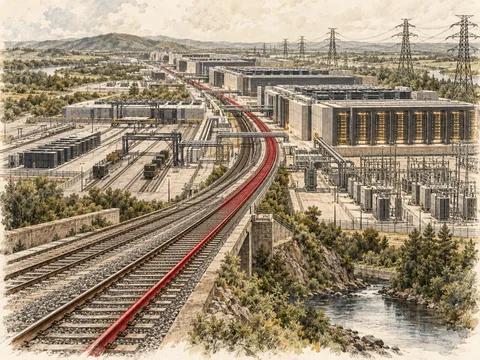
Built Like a Railway, Priced Like Software
AI’s physical infrastructure must be financed before its productivity gains arrive. This report connects that funding requirement with interest rates, equity leadership and the difference between the front and long ends of the yield curve.

The Broadening Trade: When Equity Leadership Moves Beyond Chips
A July equity-strategy companion on the gap between AI suppliers, hyperscalers and the wider market. It distinguishes earnings revisions from price momentum and records the policy assumption on which the rotation thesis depended.

The Cost of Capital: Financing the AI Infrastructure Cycle
A macro companion examining how private infrastructure funding meets government debt supply. It asks why future productivity benefits may coexist with near-term pressure on financing and real resources.

The Midnight Escalation: Shipping Risk and the Oil Curve
A dated event study of how maritime disruption can pass through insurance, cargo decisions and energy prices. The report contrasts immediate headlines with the slower restoration of confidence at sea.

Six Dislocations, One Forcing Function
A cross-asset study of what happens when rates, equities, energy and gold tell different stories. The report’s lasting value is its method for identifying assumptions that cannot all be taken for granted.

The Ninety-Five Percent Problem: Capability, Cost and AI Margins
A plain-language examination of what cheaper, capable models do to AI business economics. The practical comparison is performance and total cost on a specific task, rather than a single claim about intelligence.

Raising Supermen: A Father’s Case for Probabilistic Thinking
A personal essay connects teaching, football modelling and the skills children need when machines can calculate. The strongest part is its argument for curiosity, judgment and the humility to update a view.

The Substitution Regime
Energy, gold and semiconductor supply chains share a question: what happens when dependence is replaced by domestic control? The note follows the different clocks of physical capacity, financial claims and market pricing.

The Chokepoint Is Not the Crown: Hormuz and the Dollar
Control over a shipping route and demand for a reserve currency operate through different mechanisms. The report separates the immediate cost of interrupted trade from the slower evolution of financial depth, invoicing and reserve holdings.

How Global Shocks Reach India: Oil, Yields and Client Budgets
Four global headlines do not reach India through the same channel or at the same speed. The report ranks the direct oil bill, the cost of capital and the delayed effect of foreign technology budgets.

Eight Days of Cover: Energy Reserves and the Cost of Protection
Cheap attacks change the economics of defending refineries, ports and data centres. The report connects strategic stocks, counter-drone production and the costs that ultimately fall on asset owners.

Five Worries, One Number: The Discount Rate Behind Indian Markets
Government borrowing, inflation and global yields can converge on the rate used to value future cash flows. The note explains why economic growth and stock-market returns can diverge, then follows the pressures into India.

India’s GDP Rebase: What Changed and How to Read the Growth Number
A change of statistical base can alter measured levels without changing the economy that existed. This edition separates comparable growth calculations from questions about deflators, revisions and the income effects of import prices.

India’s Russian Oil Choice: Tariffs, Discounts and the Value of a Route
A cheap barrel is worth less if trade penalties or an unsafe route impose a larger cost elsewhere. The report puts oil discounts, export exposure and shipping access on explicit scenario ledgers rather than treating any one outcome as certain.

The Rupee, the Oil Bill and a World of Higher Borrowing Costs
A rise in global yields reaches India through the currency, capital flows and the cost of imported energy. The report combines oil-and-rupee sensitivities with a debt-dynamics illustration, while separating that illustration from an official sustainability forecast.

The New Map: Energy Corridors, Shipping and Power
A plain-language scenario for how prolonged maritime risk could change investment in energy routes. It connects transit security, pipeline feasibility and shipping economics with the choices facing India and other major importers.

The Cover Was Real. The Conviction Was Not.
An April study of Indian derivatives positioning separates a short-covering rally from durable institutional demand. The useful question is whether futures, options, participation and rates confirm the same story.

The Chase Is Fading: Positioning, Breadth and the Gamma Pin
A dated market-structure brief follows a rally driven by systematic demand into an options-expiry and geopolitical event window. Its lasting contribution is the contrast between index strength and the evidence underneath.

Paper Peace, Real Repricing: Headlines, Oil and Market Belief
A historical event study tracks how conflicting diplomatic messages travelled through oil, bonds and equities. It asks whether a headline-driven price move was supported by physical shipping and a verifiable agreement.

Bombs or Paper: Positioning Meets the Geopolitical Clock
This April briefing connects diplomatic uncertainty, market positioning and the slower repricing of energy security. It distinguishes the immediate event trade from longer-term shifts in defence, infrastructure and supply chains.

The Ceasefire That Isn’t: Reconstitution and Negotiation Risk
A historical intelligence brief examines the difference between diplomatic headlines and military reconstitution. It shows how information provenance can matter as much as the headline itself.

Model Versus Match: How Elo and Poisson Turn Ratings into Probabilities
A worked football example shows how ratings, expected goals and a score grid produce a forecast. Its July calls are retained as a historical model record, with the difference between an illustration and a validated track record made explicit.

The Model’s Last Word: Draw Risk and the Limits of a Football Forecast
The final pre-match model examines how a scoring-rate adjustment changes the distribution of outcomes. It is most useful as a lesson in small samples, sensitivity analysis and the boundary between a draw forecast and a shootout forecast.

Delhi Protests and Indian Markets: Following Risk Through Prices
A political event reaches portfolios through policy, cash flows and the price of risk. This July case study uses volatility, currency and government borrowing costs to distinguish headlines from financial transmission.

CTA Selling and Structural Market Fragility
Why mechanical selling can turn a fragile market into a sharp dislocation. This March desk note connects systematic flows, dealer hedging and vanishing order-book depth.

Iran’s Multi-Front Drone Campaign: The Gulf Exposure
A short March note on the connection between dispersed attacks, air-defence pressure and energy risk. It reads the geographic pattern as a signal, while treating the attack counts as the source’s dated estimates.

Commodity Shocks and Indian Markets: The Transmission Map
Crude, edible oils, fertiliser, metals and food shortages affect different Indian balance sheets. This desk note follows their routes into prices, fiscal costs and business margins, then separates sugar policy from the onion harvest cycle.

India on the Brink: The Iran War's Economic Transmission
A March 2026 examination of how disruption at Hormuz reached Indian households, airlines, farms and electricity supply. The report follows the pressure from physical energy shortages into inflation, the rupee and policy choices.

India's Crisis Deepens: The March Follow-Up
A follow-up to India on the Brink, focused on the four days from 7 to 10 March 2026. It examines the gap between emergency announcements, actual cargo availability and the banking channels needed to pay for supply.

Operation Epic Fury: Campaign Scenarios and Market Risk
A March scenario study linking military objectives, endurance and energy-market disruption. The original campaign sequence and force inventory contain unverified assumptions and should be read as an analytical scenario.

Nifty 50 at the Support Cluster: Bounce or Bottom?
A March technical and macro framework for distinguishing a rebound from a durable market low. It combines price structure with earnings, foreign flows and domestic policy.

Water as a Weapon: The Gulf’s Infrastructure Risk
Water security changes the strategic meaning of an energy conflict. This March analysis follows the dependence between electricity, desalination and the cities that rely on both.

Indian Banking: Franchise Quality, Funding and the Credit Cycle
A historical comparison of public-sector and private banks, with global banking benchmarks. The report’s stated data window is FY2024, CY2023 and early 2025, despite its March 2026 publication cover.

The Curve Doesn’t Lie: Reading the Oil Shock
How the shape of the oil futures curve helps distinguish immediate scarcity from a longer adjustment. The March report then traces the implications for India’s currency, policy choices and sector earnings.

The Economic Inversion of Warfare
A defence-economics essay connects inexpensive drones and faster procurement with the cost of protecting infrastructure. Its strongest question is how sustained security spending changes logistics, insurance and working capital.

Answering the Trillion-Dollar Question: The Economics of Cheaper AI
The report asks who captures the value when model capability becomes cheaper to buy. Its core framework separates premium frontier work, high-volume routine tasks and the capital required to serve both.

India Under Siege: The Full Reckoning
The combined March account of India’s exposure to the Iran war across energy, aviation, agriculture and markets. It asks how physical shortages become a fiscal, monetary and household-income problem.

Strait of Hormuz: Why Reserves Cannot Replace a Supply Route
The distinction between oil in storage and oil that can reach a buyer. This March analysis examines release rates, shipping constraints and the asymmetric exposure of importers.

The Kharg Gamble: Coercion and the Price of Escalation
A March study of how the threat to an export terminal becomes leverage over global markets. The report separates a military strike from the larger decision to damage oil infrastructure.

India Fights Back: The Policy Response to an Energy Shock
An account of India’s March response through fiscal buffers, alternative crude supplies and central-bank liquidity operations. The strongest insight is that an emergency policy announcement only matters when the operational chain works.

Zero Strategic Reserve: The LNG Recovery Problem
Why restoring LNG supply requires production, specialised shipping and safe passage to recover together. This March report examines the limits of rerouting and the role of demand adjustment.

Stagflation Junction: Energy, Rates and Policy Constraints
A March snapshot of the tension between an energy shock and a central bank’s growth mandate. It compares the signals from physical commodities, policy expectations and risk assets.

Operation Thunderbolt: Entebbe and the Limits of Military Credibility
A historical study of the Entebbe rescue and the political consequences of a long-range operation. The chronology is more solid than the source’s precise claims about insurance, exports and sovereign-market effects.

Conglomerate Reset Underway: Consumer Growth Inside an Energy Business
A sum-of-the-parts study asks how digital services and retail change the valuation of a diversified Indian business. The analysis separates operating performance, ownership stakes and future catalysts from the multiple assigned to each segment.

Thesis Ledger: Recording Calls, Horizons and Outcomes
A dated record of research theses, review horizons and the author’s own assessments. The ledger shows how a research process can record its decisions and expose its assumptions.

ETF Premiums in India: When the Trading Price Outruns the Portfolio
A dated MONQ50 case shows how trading rules and constrained unit supply can disconnect the screen price from the underlying assets.

Asset-Based Finance Software: Who Controls the Borrowing Base?
Trace loan-level data into eligibility rules, borrowing bases and usable funding. Compare private-credit platforms by controls, integration and facility complexity.

Corporate Performance Software: Recurring Revenue, Control and Exit Risk
Essential finance workflows can create durable revenue without guaranteeing an attractive purchase price. Examine product dependence, customer control and the cash needed to turn acquisitions into an integrated platform.

Fund Administration and Investment Technology: The Price of Trust
Examine fund administration fees, investment records, NAV controls and migration costs. Understand where technology improves trust and where complexity remains.

Credit Data and Analytics: Buying Evidence, Not Another Dashboard
Evaluate credit-data platforms through financial spreading, covenants and pricing. Follow lineage, licensing and difficult test cases before judging vendor value.

Agency and Trustee Services: Where Legal Duties Become Operational Risk
Compare facility agents, security trustees and paying agents. Trace the legal mandate, debt-service workflow and evidence needed for reliable execution.

Corporate Entity and Lien Services: The Quiet Infrastructure of Legal Control
Follow statutory presence, notices and lien obligations through their full lifecycle. Compare provider control, evidence, ownership cost and portability of records.

Subscription Finance: Capital Calls, Investor Rights and the Cost of Time
The fund borrows, but investor obligations provide the main repayment route. The report connects legal eligibility, operational execution and the economics of contribution timing.

NAV Lending and Sponsor Finance: Power, Incentives and the Exit Bottleneck
A portfolio valuation cannot repay a loan until cash becomes accessible. This report follows repayment rights, cash sweeps and sponsor incentives through a delayed-exit scenario.

External Borrowing in India: The Dollar Coupon and the Rupee Bill
Why a cheap dollar loan can become expensive rupee funding, and how a committee should compare the complete transaction.

Offshore Fiduciary Services: Outsourcing Work Without Losing Control
Explore fiduciary provider selection, jurisdictional duties and professional appointments. See how governance, concentration and switching costs shape the choice.

Trust and Corporate Services: People, Responsibility and Pricing Power
The strongest moat may sit with the person accepting responsibility, rather than the team processing documents. Distinguish scarce fiduciary capacity from repeatable administration and acquisition-led scale.

India’s Credit-Card Economy: Rewards, Aspiration and the Cost of Credit
A closer look at who funds the rewards, why premium customers can be expensive and when payment growth creates economic value.

Financial AI Agents: Who Owns the Evidence Behind the Answer?
Follow research from expert sources to AI-assisted decisions. Explore independent corroboration, vendor economics, permissions and the evidence behind an answer.

Cross-Border Syndicated Loans: Credit, Control and the Cash-Flow Chain
Owning the economics of a loan does not necessarily mean owning its enforceable claim or collections. Map creditor rights, intermediaries and cash before comparing headline yields.
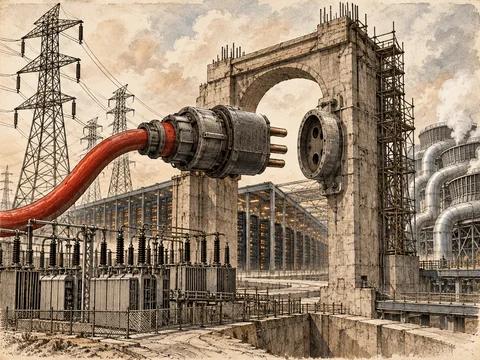
AI Infrastructure Economics: Power, Scarcity and the Cost of Ambition
Demand for computation creates a financing and delivery problem before it creates shareholder returns. Follow connected power, operating capacity and customer cash rather than chip-count headlines.

Satellite Banking Resilience: The Business Case for Staying Connected
The value of a satellite link is the banking work it preserves when ordinary connections fail.

Maritime Intelligence: Turning Ships, Cargo and Data into Decisions
Vessel positions become valuable when they support a defensible judgement about cargo, supply, prices or exposure.

Broker Market Data: Who Owns the Price, the Signal and the Licence?
Evaluate broker-derived data through coverage, timestamps and reproducible analytics. Understand how licensing and missing observations shape a usable data stack.

Sovereign AI in Banking: Who Controls the Data, Decisions and Exit?
Sovereignty rests on enforceable control over information and action, including the ability to replace a model supplier.

Collateral Management: The Hidden Machinery Behind Every Margin Call
Follow a margin call from calculation to settlement. Explore collateral systems, disputes, supplier roles and the controls behind an auditable lifecycle.

Collateral Optimisation: Who Captures the Funding Savings?
See how collateral eligibility, funding cost and intraday movement determine real savings. Examine vendor economics and the limits of modelled optimisation.

Financial-Crime Technology: Why More Spending Does Not Prove Better Control
Reconcile financial-crime technology spending with operational outcomes. Examine data, detection, migration overlap and why fewer alerts do not prove better control.

Real-Time Screening: The Decisions Hidden Inside a Millisecond Promise
Trace screening from transaction data to match, decision and recovery. Test false positives, list changes, latency and failure policy across the full service.

Entity Resolution: Who Is Who in the Bank's Data?
Follow fragmented records into governed identity. Compare matching, master data and graph investigation, with attention to false links, stewardship and provenance.

Payment Tokenisation: The Business of Secure Digital Credentials
Follow the payment credential from issuance to token provisioning and revocation. Explore security decisions, integration costs and lifecycle platform economics.

Payment Onboarding: Why One More Entity Can Change Everything
Understand why multi-entity payment onboarding extends beyond approval. Map verification, treasury permissions, integration and reconciliation into one flow.

Stablecoin Payment APIs: The Business Beneath the Blockchain
Explore the custody, orchestration and fiat legs behind stablecoin payments. Follow transaction states, reconciliation and the economics of a complete corridor.

Voice AI in India: Language, Trust and the Economics of a Resolved Call
The real product is a correctly completed customer task, supported by language coverage, controlled actions and a competent human fallback.

Pricing Engines: The Boundary Between Model Expertise and Platform Power
Define the boundary between specialist pricing engines and integrated platforms. Compare coverage, calibration, validation and lifetime costs of build versus buy.

From Spreadsheets to Databases: Scaling Without Losing the Truth
Move from a useful spreadsheet prototype to reliable data architecture. Diagnose load, compare partitioning choices and preserve correctness through migration.

Datacenters and Colocation: The Economics of Keeping Finance Online
Match banking workloads to cloud, owned facilities and colocation. Explore latency, failure containment, degraded service and the economics of placement.

Process Automation in India: Productivity, People and the Work Behind the Bots
Automation creates value when it removes bottlenecks and preserves accountability. Faster tasks and released staff capacity need careful interpretation.

Digital Payments Explained: Who Moves the Money and Who Bears the Risk?
Understand cards, wallets and account transfers through their money flows. Distinguish authentication, authorisation, settlement and the risks between them.

Probability in Finance: What We Know, What We Price and What We Assume
Connect scenarios, distributions and conditional expectations to financial models. Separate physical probabilities, pricing measures and evidence about rare losses.

Brownian Motion and Martingales: What Random Paths Can Tell Us
Explore random paths, time scaling, conditional expectations and stopping rules. Connect Brownian motion and martingales to practical financial modelling questions.

Ito Calculus: Why Curvature Changes the Economics of a Hedge
Connect stochastic motion to valuation through curvature and financing. See why timing conventions, cash ledgers and model assumptions matter to a model hedge.

Stochastic Models: Growth, Mean Reversion and the Assumptions Between Them
Compare proportional growth and mean-reverting dynamics. Connect SDEs, exact transitions, simulation checks and parameter units to the state being modelled.

Time-Series Forecasting: Separating Predictive Skill From Hindsight
Test financial forecasts with the information available at each decision. Compare model dynamics, forecast losses, interval calibration and updating policies.

Numerical Finance: When a Solver Converges to the Wrong Answer
Explore root finding, interpolation and calibration through their error sources. Learn why convergence, conditioning and meaningful precision need separate checks.

Financial PDEs: Turning Contract Terms Into a Valuation Problem
Translate dynamics and contract terms into a full valuation problem. Connect PDEs, pricing expectations, boundary conditions, path dependence and exercise rights.

Finite-Difference Pricing: Stability, Boundaries and the Illusion of Precision
Turn option contracts into controlled grids. Compare schemes, boundary conditions, payoff treatment and refinement evidence before trusting a precise price.

Monte Carlo Pricing: Buying Precision Without Fooling Yourself
Build simulation estimates around clear payoffs and joint scenarios. Separate sampling error, time-step bias and model uncertainty before spending on more paths.

Portfolio Optimisation: When the Best Weights Are Too Fragile to Trade
Build portfolios around joint risk, practical constraints and execution costs. Inspect fragile weights, turnover and input sensitivity before trusting the optimum.

Asset Pricing and Factor Risk: What Investors Are Paid to Bear
Expected returns depend on the risks investors bear and the model used to describe them. Separate a measured exposure from its expected reward and a past residual from future skill.

Yield Curves and Bond Risk: What Rates Reveal and Conceal
Follow each bond cash flow from market quotation to valuation and hedge. The report separates observed rates, teaching examples and the limits of aggregate duration.

Interest-Rate Models: The Curve You Fit and the Risks You Keep
Compare short-rate, forward-curve and market-rate models. Explore calibration, factor choices and why fitting today's curve does not validate tomorrow's dynamics.

Credit Models: How Default Risk Becomes a Price and a Portfolio Loss
Follow default assumptions into CDS value and portfolio loss. Compare structural and intensity models, recovery sensitivity and concentration hidden across names.

Machine Learning for Finance: Why Accuracy Can Mislead
Compare financial classification methods through base rates, calibration and error costs. Build useful validation around the decision the model must support.

Financial Machine Learning: From Hidden Patterns to Sequential Decisions
Compare clustering, neural networks and reinforcement learning by the problems they solve. Inspect representation, rewards, stability and realistic evaluation.

Deep Seabed Security: The Infrastructure Behind Digital Power
Digital power depends on a complete service path: cables, shore facilities, software, people and the ability to restore what fails.

Arctic and Greenland: Sovereignty, Resources and the Limits of Geography
A map creates strategic questions. It does not settle who has authority, whether a mineral project pays or whether a route works end to end.

Walong and the Lohit Valley: People, Place and Border-Region Resilience
Walong is a place where people live as well as a place of remembrance. The research begins with that distinction and keeps its evidence boundaries visible.

AI Threat Intelligence: When Automation Changes the Balance of Power
The strategic issue is what an automated system can do, who authorises it and whether the institution can stop and reconstruct its actions.

Iran Country Risk: Three Paths for Institutions, People and Resources
The useful question is which institutions and services can adapt under pressure—and what observable evidence would change the assessment.

Iran’s Strategic Culture: Identity, Autonomy and the Price of Influence
A narrative of autonomy becomes strategically useful only when institutions, people and productive capacity can sustain it.

Iran Capability and Procurement: What Money Can—and Cannot—Buy
Equipment becomes capability only when people, support, maintenance and credible evidence connect it to an actual requirement.

Iran’s Industrial Base: Skills, Dependence and the Reality of Self-Reliance
Self-reliance is a production-system question: skills, inputs, testing, infrastructure and institutions must work together.

The Price of Staying: Iran, Strategic Endurance and the Cost of Conflict
A state can afford another month of operations while losing the people, capacity and political room needed for its next decision.

Iran Sanctions: Power, Dependence and the Economics of Strategic Choice
Strategic options depend on what is lawful, financeable and deliverable—not on the number of agreements announced.

Decision Analytics: Power, Incentives and the Numbers That Matter
Turn business metrics into decisions with named owners. Explore causal reasoning, cash forecasts, venture evidence gates and the incentives hidden in dashboards.

Business Statistics: The People and Risks Hidden Behind an Average
Look beyond averages to sample bias, distribution shape and uncertainty. Understand how population mix and misleading precision can distort business decisions.

Hypothesis Testing: When a Convincing Business Story Is Just Noise
Design business experiments around decisions and error costs. Interpret p-values, power and practical significance without mistaking a convincing story for evidence.

Regression in Business: Prediction, Persuasion and False Confidence
Turn regression output into a defensible business conclusion. Distinguish fit from prediction, uncertainty from precision and association from causal evidence.

Futures Hedge Ratios: Sizing Risk When Production Is Uncertain
Correct arithmetic is only the beginning of hedge sizing. The decision also depends on forecast volumes, unit conventions and the risk left when market relationships change.

Commodity Hedging: The Hidden Cost of Basis, Roll and Liquidity
A hedge changes the shape and timing of risk. This report explains how local prices, contract rolls and cash margin can defeat a superficially correct market view.

Currency Hedging: Forward Carry, Contract Choice and Commercial Control
An exchange-rate view is not a hedge policy. Start with the currency, timing and certainty of the cash flow, then compare the rights, obligations and costs of each instrument.

FX Proxy Hedging: Cheap Protection and the Risk Left Behind
Lower transaction cost buys a different hedge, not identical protection at a discount. Measure the basis, translation and stress exposures that remain after substituting a proxy.

Portfolio Diversification: When Correlations and Defensive Assets Fail
An asset is defensive only against a specified loss mechanism. This report connects changing correlations, tail dependence and funding needs to practical portfolio choices.

Portfolio Insurance: Protection That Pays When Liquidity Matters
Protection must address the loss the investor cannot afford and remain funded until it is needed. Compare reduced exposure, purchased convexity and cash reserves as distinct tools.

FCNR Deposits and India’s Reserves: When Insurance Becomes Expensive
A policy framework for comparing the next dollar of protection with its hedging, liquidity and refinancing costs.

Bank Capital and Credit Supply: Who Bears the Cost of Resilience?
Stronger bank capital can change both resilience and the location of risk. Evaluate the transmission through funding, lending, dealer inventories and non-bank finance.

Credit Ratings and Equity Markets: Why Stronger Borrowers Can Disappoint Investors
Creditors and shareholders own different claims on the same business. Follow credit quality, discount rates and marginal flows to understand why their conclusions can diverge.

When Valuation Models Disagree: Follow the Cash, the Units and the Assumptions
Investigate conflicting valuation models by checking the claim, units, cash flows and comparables. Explain the economic disagreement before averaging the answers.

Oil Supply Disruption: Strait Risk, Alternative Routes and Price Pressure
A disrupted route is not the same as permanently lost production. Follow the permissions, logistics and refinery constraints that determine whether relief becomes usable supply.

Wealth Management in India: Qualifications, Permissions and the Cost of Trust
A qualification opens an option. A regulated business also needs the right permissions, client proposition and continuing control environment.

Volatility Strategies for Traders and Investors
Connect volatility signals to position size, option hedges and cash needs. Use examples and historical shocks to make trading and portfolio decisions clearer.

Risk Sensitivities: The Units, Curvature and Mapping Errors That Matter
Trace market-factor changes into reported risk. Check bump conventions, curvature, grid mapping and aggregation before accepting a reassuring sensitivity total.

Value at Risk: Why the Model Choice Changes the Loss Number
Compare historical, parametric and conditional-volatility VaR on one fair experiment. Separate distribution choices, sampling conventions and changing forecasts.

VaR Backtesting: What an Exception Count Can and Cannot Prove
Build an aligned exception file and interpret coverage tests carefully. Understand test direction, limited power and how diagnosis differs from capital rules.

Backtesting Exception Clusters: When the Right Count Hides the Wrong Model
Keep the breach sequence intact. Explore transition tests, waiting times and conditional coverage to understand why a plausible total can hide dynamic model failure.

P&L Attribution: Why Two Models Can Agree on Direction and Still Disagree
Compare P&L measures through beta, basis, optionality and distributional fit. Understand how high correlation can coexist with missing risk and wrong magnitudes.

Expected Shortfall: The Loss Beyond the Threshold and the Cost of Exit
Distinguish a loss threshold from tail severity. Examine Expected Shortfall, horizon assumptions, stressed calibration and the evidence needed for aggregation.

Stress Testing: Work Backward From the Loss You Cannot Absorb
Apply historical and hypothetical shocks to the current book, then work backward from failure. Connect stress results to liquidity, executable actions and ownership.

Modellability: When Market Prices Become Regulatory Evidence
Turn prices into traceable evidence. Understand duplicate removal, count and continuity tests, and why economic relevance alone does not establish eligibility.

Model Governance: When a Fix Becomes Evidence and Evidence Becomes Control
Follow a validation finding through baseline preservation, testing, approval and actual use. Separate a code change from evidence of an effective production control.

FRTB Architecture: The Gates, Evidence and Capital Boundaries
Map trading-book positions through standardised and internal-model routes. Connect eligibility, modellability, attribution and capital under the relevant regime.

Counterparty Exposure and XVA: The Risk Between Today and Settlement
Trace future market states into exposure, collateral and valuation adjustments. Explore wrong-way risk, event timing and the limits of numerical precision.

Portfolio and Option Models: Useful Benchmarks, Dangerous Certainty
Use portfolio, factor and option models as controlled benchmarks. Test assumptions, sensitivities and missing exposures before turning a result into a decision.

Option Greeks and Payoffs: From Market Conviction to Controlled Exposure
A bullish opinion can produce very different option exposures. Build the payoff from signed legs, aggregate the Greeks and test the changing risk before expiry.

Black–Scholes in Practice: Building a Pricing Engine You Can Trust
Build an option-pricing engine around clear conventions and independent checks. Use parity, boundary cases, Greeks and inverse-pricing diagnostics to find errors.

Realised Volatility: What Closing Prices Hide From Traders
Compare close-to-close, range-based and gap-aware volatility measures. See how session data, estimator assumptions and annualisation change the trading question.

Volatility Forecasting: Why Shocks Linger and Downside Moves Matter
Separate shock response, persistence and return-distribution assumptions. Evaluate conditional volatility forecasts at the horizon where trading decisions are made.

Volatility Surface Trading: Skew, Convexity and the Price of Protection
A smooth volatility surface can still hide poor quotes and expensive trades. Connect each surface feature to an economic question, a tradable structure and a scenario test.

Volatility Risk Premium: Fear, Insurance and the Price of Convexity
Investors may pay for protection precisely because it works when capital is scarce. The premium is conditional compensation for bearing that risk, rather than a promise of steady income.

Volatility Futures: Trade the Contract, Understand the Curve
The displayed volatility index and the contract you can trade are different objects. Trace settlement, maturity and cash-per-point exposure before turning a mean-reversion view into a position.

Volatility Carry Strategies: Premium Income and the Risks Behind It
Premium income pays for risks that do not arrive evenly. Translate a volatility view into a defined payoff, an affordable hedge budget and an exit that can actually be executed.

Trading Backtests: Where Paper Profits Meet Costs, Timing and Evidence
Reconstruct what a strategy could know and trade. Inspect costs, cash accounting, model selection and uncertainty before treating paper returns as usable evidence.

Quantitative Macro Research: Building an Edge Without Future Data
Build macro research around data vintages, publication times and testable ideas. See how feature contracts and evaluation controls expose false predictive skill.

FX Options Beyond Vanilla: The Hidden Cost of Contract Details
Explore Asian, digital, barrier and quanto FX options. See how currency conventions, fixing schedules, monitoring and covariance change a reproducible valuation.