

Infrastructure beneath finance
The infrastructure behind every trade.
You paid for something this morning and nothing left one building for another. Two ledgers had to agree that a number had moved. Your bank sent a message and a clearing system edited two records. That instruction is the machinery under every market, invisible by design.
Inside the financial network
An animated introduction to The Stack.
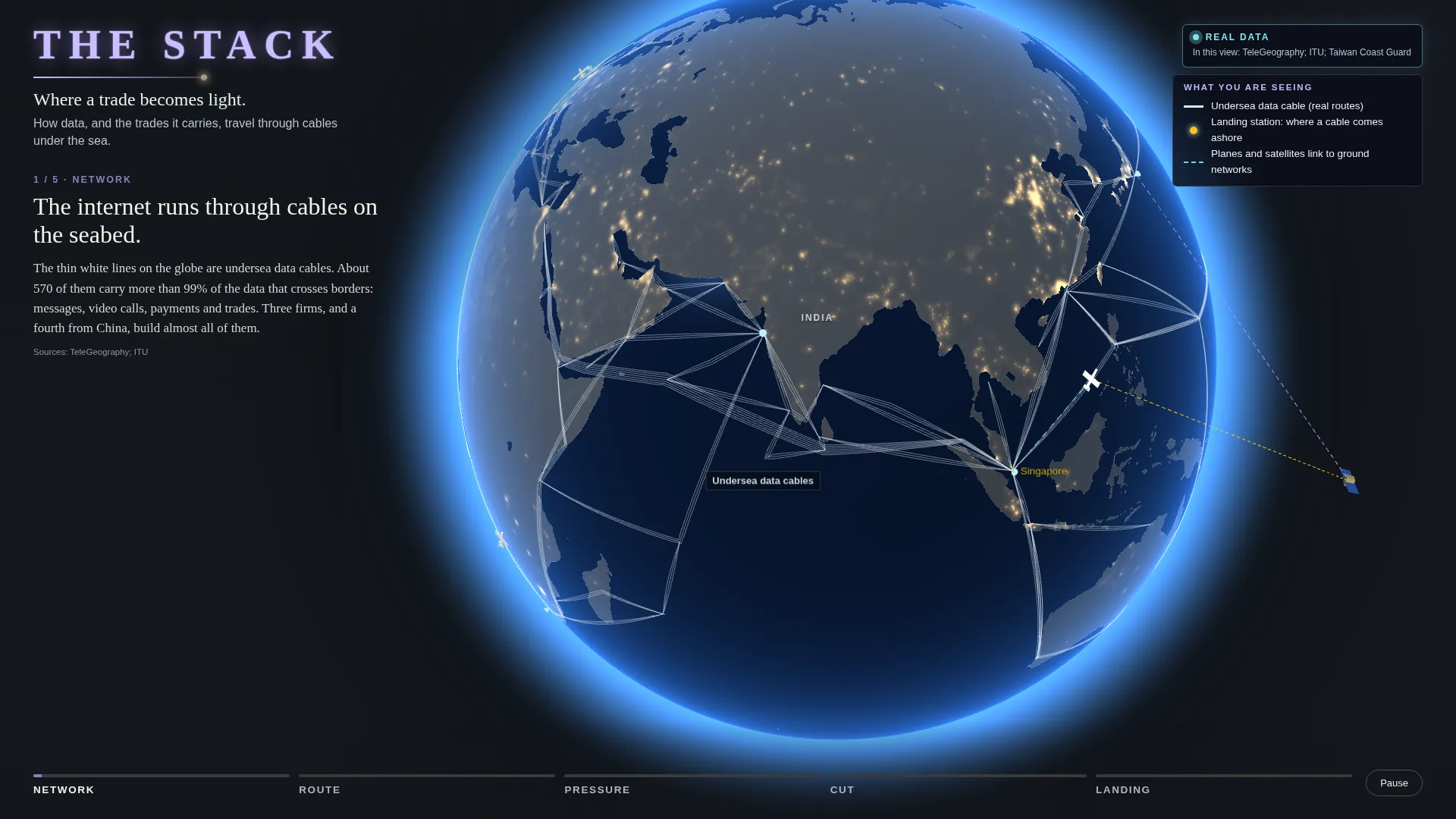
How a trade travels through undersea cables
Network. The internet runs through cables on the seabed. About 570 undersea data cables carry more than 99% of the data that crosses borders. Three firms, SubCom (US), ASN (France) and NEC (Japan), laid 90% of new cable since 2017; China’s HMN is the fourth.
Route. One share trade leaves Mumbai for London. Its data crosses the Arabian Sea and the Red Sea, goes overland in Egypt and runs under the Mediterranean, arriving in about one-twentieth of a second. Inside the cable, glass fibres about 9 micrometres across carry it as light, and a repeater every 50 to 100 km restores the signal.
Pressure. Taiwan reported 36 cases of cable damage by outside forces between 2019 and 2023. In 2025 a Taiwan court jailed the captain of the Hong Tai 58 for cutting a Taiwan–Penghu cable. China plans new South China Sea cables and seabed sensors. Seven cable systems cross the Strait of Hormuz; they carry under 1% of global bandwidth, but four of them matter directly to India.
Cut. Fourteen cables run through the Red Sea, carrying most communications between Europe and Asia. When cables near Jeddah break, data takes the long way round Africa, more than twice the distance, so every order arrives later. About 200 cable faults happen worldwide each year, more than 80% of them from fishing and ships’ anchors.
Landing. Cables come ashore near data centres. Northern Virginia, Beijing, London, Tokyo and Frankfurt hold the most capacity, and Mumbai has the most under construction. When a cable breaks, a repair ship lifts it with a grapnel, splices it on deck and lowers it back. A telecom repair costs about £500,000 to £1 million.
- Cables, bandwidth and capacity: TeleGeography; ITU; ICPC.
- Data centres: Cushman & Wakefield.
- US–China cable contest: Reuters; US Federal Communications Commission; China State Shipbuilding Corp.
- Taiwan: Taiwan Coast Guard Administration; Tainan District Court; Marine Insight; BBC.
- Red Sea and Hormuz: NetBlocks; HGC Global Communications; AP; CNN; Tasnim; Observer Research Foundation; Submarine Networks; Capacity Media.
- Cable repair: KDDI Cableships & Subsea Engineering.
Motion pauses when you move on to the reports.
Under every market is machinery that nobody photographs. It decides more than the price does.
A payment feels instantaneous and complete. You tap, it clears, the thing is yours, and money appears to have travelled from you to somebody else.
Nothing travelled. Money does not move; nothing left one building and arrived at another. Two ledgers, held somewhere neither of you has ever been, must be edited so that one number falls and another rises by the same amount.
Which raises the only question that matters in this business: what guarantees that both edits happen, and that they happen together?
Usually a third institution neither of you banks with. A netting agreement signed years earlier by lawyers neither of you has met. Collateral posted in advance against the possibility that one side fails. And a window — minutes, sometimes hours — in which one side has paid and the other has not.
That window is where the machinery actually lives, and on 26 June 1974 it opened.
Bankhaus Herstatt was a mid-sized bank in Cologne. The German regulator withdrew its licence and closed it at half past three in the afternoon, Frankfurt time. It was half past ten in the morning in New York. Its counterparties had already paid Deutschmarks into Herstatt that day and were waiting for dollars back. The dollars never came.
Nobody had thought carefully about those six hours, because nobody had needed to. Afterwards the six hours acquired a name, a standing committee of central bankers in Basel, and eventually a settlement system built for no purpose other than closing them.
That is the argument for reading this section. When the machinery works it is invisible, and it is meant to be. When it fails, nothing else in the market matters — not the price, not the strategy, not the view — until it is fixed.
So this section reads the machinery: the rails, the clearing houses, the custodians and the platforms that sit under every market. It is not a market. It is the floor the market stands on.
A deeper view.
A considered selection from The Stack.
 The Stack / Featured research
From Chips to Bodies: The Physical-AI Application Layer
A robotics study traces value from models and simulation to actuators, components and deployment. It distinguishes a promising industrial platform from a market already paying for ambitious future shipments.
Read the reportFinancial AI Agents: Who Owns the Evidence Behind the Answer?
Follow research from expert sources to AI-assisted decisions. Explore independent corroboration, vendor economics, permissions and the evidence behind an answer.

The Inference Inflection: Who Captures AI’s Margin?
An agent-economics framework connects token demand, inference costs and workflow adoption. It asks which businesses capture value when agents perform longer tasks and infrastructure costs change.
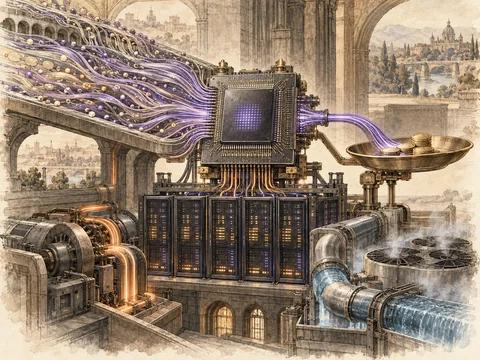

Asset-Based Finance Software: Who Controls the Borrowing Base?
Trace loan-level data into eligibility rules, borrowing bases and usable funding. Compare private-credit platforms by controls, integration and facility complexity.
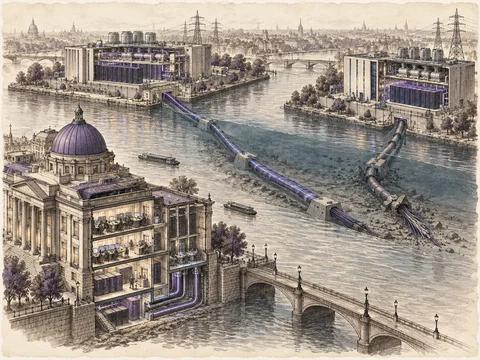
Datacenters and Colocation: The Economics of Keeping Finance Online
Match banking workloads to cloud, owned facilities and colocation. Explore latency, failure containment, degraded service and the economics of placement.

Broker Market Data: Who Owns the Price, the Signal and the Licence?
Evaluate broker-derived data through coverage, timestamps and reproducible analytics. Understand how licensing and missing observations shape a usable data stack.

Primary Markets Technology: Who Controls the Book and the Allocation?
Trace investor demand into bookbuilding and allocations. Examine identity, order changes, approval gates and the work technology leaves with the underwriter.

Fund Administration and Investment Technology: The Price of Trust
Examine fund administration fees, investment records, NAV controls and migration costs. Understand where technology improves trust and where complexity remains.

Collateral Management: The Hidden Machinery Behind Every Margin Call
Follow a margin call from calculation to settlement. Explore collateral systems, disputes, supplier roles and the controls behind an auditable lifecycle.

Stablecoin Payment APIs: The Business Beneath the Blockchain
Explore the custody, orchestration and fiat legs behind stablecoin payments. Follow transaction states, reconciliation and the economics of a complete corridor.

Payment Tokenisation: The Business of Secure Digital Credentials
Follow the payment credential from issuance to token provisioning and revocation. Explore security decisions, integration costs and lifecycle platform economics.

Financial-Crime Technology: Why More Spending Does Not Prove Better Control
Reconcile financial-crime technology spending with operational outcomes. Examine data, detection, migration overlap and why fewer alerts do not prove better control.
Infrastructure beneath finance
Continue through the complete collection in the Library.
Ideas worth turning over.
Four illustrated chapters, from 1950 to 2040.