Original Lens and publication context
Four news stories in two days. They look separate. They are one story. Keeping physical things safe has just become expensive.
- India keeps only about eight days of oil for an emergency, and it has now started building more.
- In the same week America made cheap attack drones part of its normal war plan, and a defence firm showed a cheap gun to shoot them down.
- Attacking is now very cheap. Defending is not. So spare stock and guards have stopped being a choice.
- The first hit to profits will not be at defence firms. It will be a new bill at refineries, ports, power stations and data centres.
- We stay with refiners over oil, storage over oil producers, and gold as insurance. We also cut what we expect data centres to earn.
TRIGGER
Four Stories, One Story
Four things happened in two days. Most people filed them in three boxes. They belong in one.
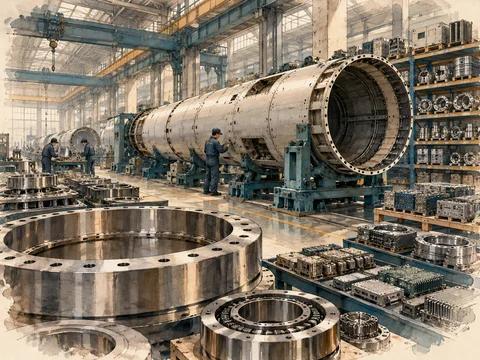
One. India is building more oil storage. The state company is finishing a study for a site at Bikaner in Rajasthan. It has done an early study for a cave store at Bina in Madhya Pradesh. A third site is coming up at Mangaluru, on the west coast. It will hold about thirteen million barrels. It will cost about $1.6 billion. Half is for emergencies. Half is for normal trade.
The cost is not the point. What India holds today is the point. The whole national store covers about eight days of use. Eight days.
Two. America set up its first joint drone attack force. Friendly countries will sit under one command. Cheap one-way drones are no longer a toy. They are now part of the plan, with a boss and a budget.
Three. Analysts began covering the small American firms that make drone parts. The facts behind that matter more than any price target. China makes about 70% of the world’s drones. It makes about 90% of the parts. American law has spent nine years pushing Chinese parts out. The stated plan is to buy two hundred thousand drones.
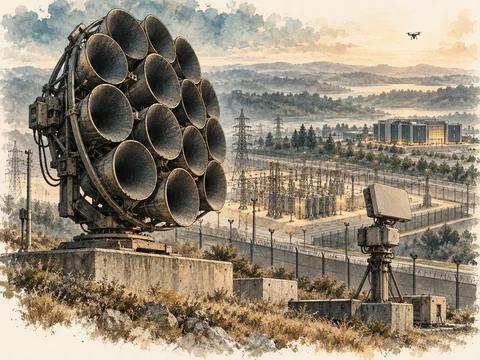
Four. An American defence firm showed a gun that shoots drones down. It fires guided 50mm shells very fast. The point is not that it aims well. The point is that each shot is cheap. And the customer list is not only army bases. It also names data centres, refineries, power plants and substations.
Now put them together. For thirty years we ran things as cheaply as we could. We kept very little spare stock. We put no air cover over normal buildings. Both looked like wasted money. The Iran war changed that. Spare stock and protection are now things you have to buy. The buying has begun.
FLOW
The Money Moves in Three Steps. The Last Step Is a Bill.
Step one. Now to December. Budgets. A new force, a study, a product launch. These are budget events. They are not sales. Money is being set aside. Orders come later.
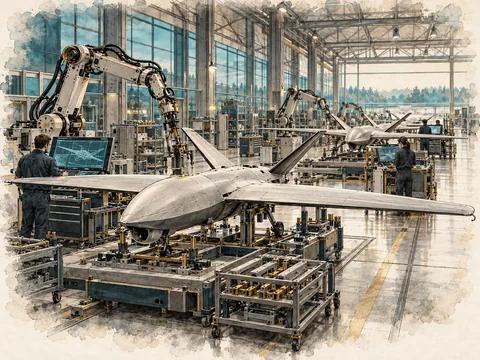
Step two. Six months to a year. Parts. Motors, batteries, cameras, guided shells, radar, and the software that joins them. The problem here is simple. One American parts maker now in the news has about 240 staff. It is opening about 100,000 square feet of factory this year. That is a test line. It is not a supply chain. The gap between the size of the prize and the size of the factory is the whole risk.
Step three. One to two years. This is the part most people are missing. The bill falls on the people being protected. Not on the people selling protection.
If the gun is sold to guard a data centre, a refinery and a power station, then the owners of those sites pay for it. They pay for the kit. They pay to fit it. They pay staff to watch it. And they pay a bigger insurance bill behind it all. That eats into profit at exactly the assets investors have paid the most for. Nobody has put it in a model.
Everyone is watching defence order books. The first real hit to profits is a new bill inside the buildings the drones point at.
Figure 01 · Qualitative comparison
From a defence announcement to an asset-owner bill
| Stage | Evidence required | Main risk |
|---|---|---|
| Budget | Funding and procurement authority | Announcement never becomes an order |
| Production | Accepted deliveries and trained support | Parts, staffing and integration constrain scale |
| Deployment | Protection operating at the site | Acquisition cost excludes recurring support |
| Economics | Who pays, and what downtime is avoided | Public protection or better technology changes the burden |
How This Reaches India
Three routes. The clearest one first.
Oil. Do not read this as a call on the oil price. India buys about 85% of its crude. That is about five million barrels a day. Thirteen million barrels is about two and a half days of use. Filling it near $80 costs about a billion dollars. The yearly import bill is $140–150 billion. So the money is small. The message is not. The government now treats supply shocks as normal, not rare. Reserve buying is slow. It does not chase price. It quietly holds the market up on weak days. It does not move the headline price.
Building work. Caves, tanks, pipelines, port handling, and the long contracts around them. Dull work. It shows up in order books. It is the cleanest way for an Indian portfolio to own this theme.
Data centres. This is the one nobody has priced. India is building AI capacity on thin rents. The cost numbers come from a time when security meant a fence and a guard. Hardening will become normal in America first. Insurers will push it. Rules will follow. It reaches Indian projects two to three quarters later. So use a higher running cost for Indian data-centre projects than the models use today. That trims long-term profit. It is not a reason to avoid the sector.
RISK
What Would Prove Us Wrong
1. A deal. Talks are live. A deal that holds would cut the fear premium fast. Reserve plans would slow back down. Defence shares would fall hard. But note the split. A deal hurts the short-term trade. It leaves the long-term one standing. Pushing Chinese parts out is written into law. It does not depend on the news. And eight days of cover is too thin under any government and any peace.
2. A launch is not an order. This field is full of products shown once and never built in numbers. Building at scale is the hard part. The maker says so itself.
3. India is slow. Earlier phases of this programme ran years late. A finished study is a piece of paper. It is not a hole in the ground. Cut the timeline.
4. The state may pay instead. Governments may name some sites as critical and defend them with public money. Then the bill goes to the treasury, and our data-centre point is wrong. Watch who signs the first private contract.
5. Crowded trade. When every analyst on a small company says buy, most of the buying is already done. That is a warning about the price you pay to get in. It is not a warning about the idea.
PRICE
What Is Already in the Price
Big defence names have already run up on Europe and the Middle East. Drone defence is a small line inside a big business. So the big gains sit with the small specialists. So does the risk of failure.
Oil is not pricing a slow reserve bid. It should not. Refining is pricing tight fuel supply. Putting refineries on the target list argues for more of that, not less. Record diesel profits fit. Gold is pricing a tense world. That is the job we gave it.
Our hypothesis is that some data-centre and AI-site models may understate additional physical-security costs. This needs to be tested against project budgets, insurance and protection arrangements.
Position
We talk about groups of companies. We do not name single shares.
1. Stay with refining profit over the oil price. Same as before, and stronger now. The danger has moved to fuel supply, not just to the cost of crude.
2. Prefer storage, tanks, pipelines and ports over oil producers. Storage gets built whatever the price. Producers live and die by the price.
3. Cut what you expect data centres and AI sites to earn. Add a security cost. Add a bigger insurance cost. Do not chase the yield until that bill shows up in company accounts.
4. Drone defence and drone parts: we like the group. Size it for failure to deliver, not for the size of the market. Spread it over several names rather than one specialist.
5. In India, stay with home demand and home industry over shares tied to the world economy. Add storage and logistics builders. Allow a discount for slow work.
6. Keep gold as insurance. It is not a bet.
7. Do not do any of this with long bonds. America, India and the Gulf are all spending more at once. Short and medium bonds over long ones.
We are working on a four-month view. The long-term part survives a Middle East deal. The short-term part does not. We have sized it that way.