

Indian economic policy
Where a policy becomes a number.
In 1540 an Afghan soldier held Delhi and struck a coin of fixed weight and purity. A state that cannot measure what it is owed cannot collect it. He built roads so the coin could travel, and taxed what moved. Every government since has been judged by that coin.
The Indian Ocean balance
An animated introduction to Arthshastra Dispatch.

Motion pauses when you move on to the reports.
A billion people, one balance sheet, and sums that nobody in power wants to add up.
There is a coin in your pocket, and an Afghan soldier who held Delhi for five years put it there.
Sher Shah Suri took the throne from the Mughals in 1540 and lost it to them again by dying. In between he did something more permanent than conquest. He minted a piece of silver of fixed weight and fixed purity and named it the rupiya, and he built roads and rest houses so that it could travel. The purpose was not commerce and it was certainly not beauty. It was tax. A state that can measure what it is owed can collect it. A state that can collect can pay soldiers, and a state that can pay soldiers can hold ground. The coin was an instrument of rule, and everyone who mattered understood that at the time.
The Mughals kept it. The East India Company kept it, and then found it could set the rate at which the coin exchanged for silver and gold, and discovered that this was a more efficient method of extraction than any tax it could have imposed directly. The British Crown kept it, and in 1893 closed the mints to silver, which halved what an Indian salary was worth in London overnight and was decided in London for London’s reasons.
The Republic kept it. In 1966 it devalued the coin under pressure from lenders and the government that did it lost the next election. In 1991 it pledged sixty-seven tonnes of gold against the coin’s collapse, and the humiliation of flying that gold to London bought the reforms that made the country you live in. In 2016 eighty-six per cent of the coin, by value, was withdrawn from circulation overnight, and the queues outside the banks were the longest visible expression of state power most Indians had seen in their lives.
The same instrument, for four hundred and eighty years, doing the same job. Every government of India has been judged by what it did to that coin, and every one of them knew it.
India is not a market. It is a state in the middle of a long argument with itself about what it intends to become, and the argument is conducted through the public accounts — the budget, the deficit, the tax collected, the subsidy that cannot be stopped. This section reads the accounts, because that is where the argument actually takes place, and because the coin in your pocket is the record of who has been winning it.
A deeper view.
A considered selection from Arthshastra Dispatch.
 Arthshastra Dispatch / Featured research
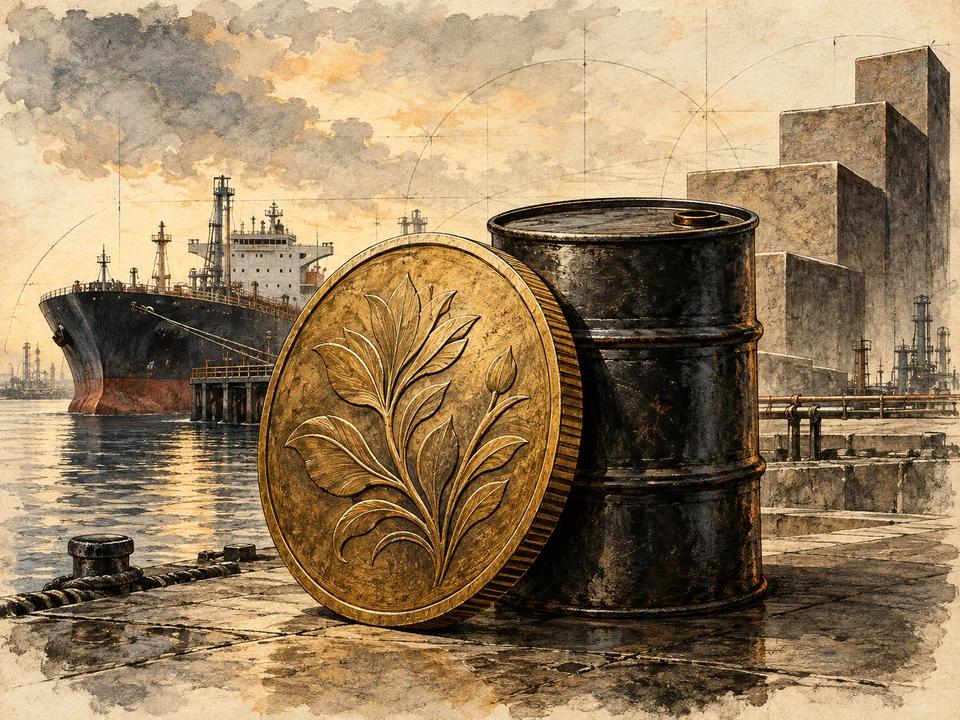
The Rupee, the Oil Bill and a World of Higher Borrowing Costs
A rise in global yields reaches India through the currency, capital flows and the cost of imported energy. The report combines oil-and-rupee sensitivities with a debt-dynamics illustration, while separating that illustration from an official sustainability forecast.
Read the reportIndia’s Russian Oil Choice: Tariffs, Discounts and the Value of a Route
A cheap barrel is worth less if trade penalties or an unsafe route impose a larger cost elsewhere. The report puts oil discounts, export exposure and shipping access on explicit scenario ledgers rather than treating any one outcome as certain.

Financial Guarantees in India: Who Takes the Risk and Who Gains Access?
Guarantees change the allocation of a defined loss. Their value depends on the financing constraint they actually remove.


Zee Just Bought Football: The Economics of Sports Rights
A study of how a long sports-rights calendar can become an audience-acquisition business. The test is whether retained viewers and advertising income can justify the cash commitment.
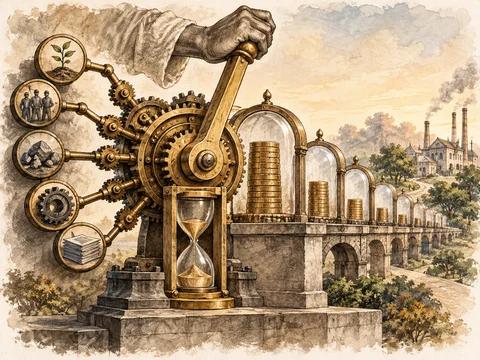
Five Worries, One Number: The Discount Rate Behind Indian Markets
Government borrowing, inflation and global yields can converge on the rate used to value future cash flows. The note explains why economic growth and stock-market returns can diverge, then follows the pressures into India.

FCNR Deposits and India’s Reserves: When Insurance Becomes Expensive
A policy framework for comparing the next dollar of protection with its hedging, liquidity and refinancing costs.

Conglomerate Reset Underway: Consumer Growth Inside an Energy Business
A sum-of-the-parts study asks how digital services and retail change the valuation of a diversified Indian business. The analysis separates operating performance, ownership stakes and future catalysts from the multiple assigned to each segment.

India’s Credit-Card Economy: Rewards, Aspiration and the Cost of Credit
A closer look at who funds the rewards, why premium customers can be expensive and when payment growth creates economic value.
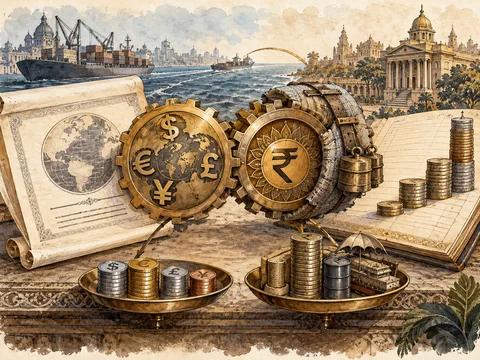
External Borrowing in India: The Dollar Coupon and the Rupee Bill
Why a cheap dollar loan can become expensive rupee funding, and how a committee should compare the complete transaction.

Sovereign AI in Banking: Who Controls the Data, Decisions and Exit?
Sovereignty rests on enforceable control over information and action, including the ability to replace a model supplier.

ETF Premiums in India: When the Trading Price Outruns the Portfolio
A dated MONQ50 case shows how trading rules and constrained unit supply can disconnect the screen price from the underlying assets.

Building a Business in Una: Local Capability, Paying Customers and Patient Capital
A district’s advantage lies in what it can deliver reliably. Test the customer, the inputs and the cash cycle before committing fixed capital.
Indian economic policy
Continue through the complete collection in the Library.
Ideas worth turning over.
Four illustrated chapters, from 1950 to 2040.